The Cancer Journals — Audre Lorde
Lorde confronts bodily loss and the social pressure to conceal it. Beside this song, the book sharpens the difference between reconciliation and compulsory restoration.
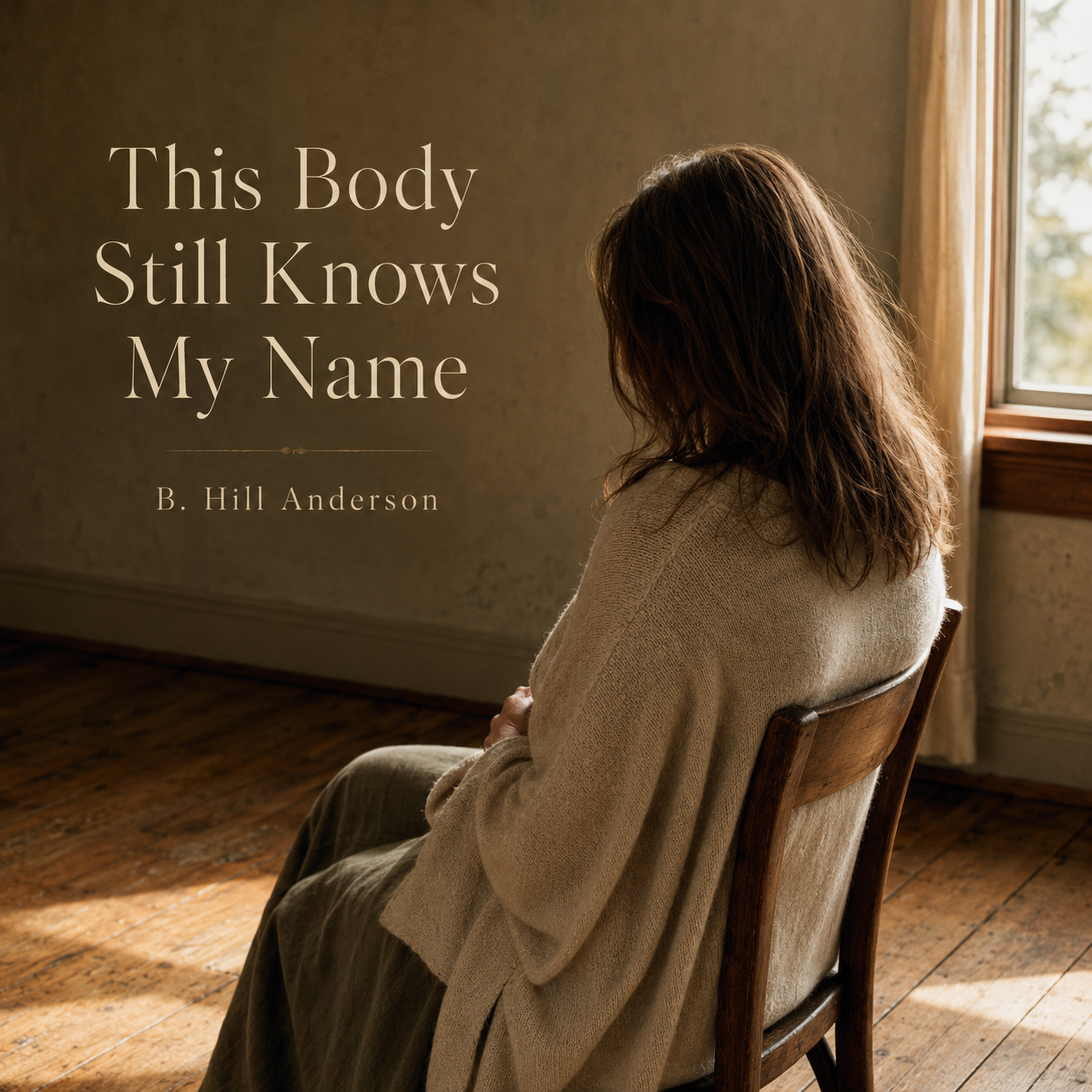
A quiet song about estrangement from the body and the difficult return to trust.
Watch
Watch directly on YouTube. The final lyrics below provide the text transcript.
Listen
Playback does not begin automatically.
Lyrics
I quit looking in the mirror
For a while I just looked down
Pulled my sweater close around me
Moved through rooms without a sound
I was trying to live somewhere
Past the reach of skin and bone
Like if I could leave this body
I would not feel so alone
This body still knows my name
After all the fear and change
After all the scars and silence
And the nights I could not face
I am learning how to love
What carried me when I was weak
What I thought was only broken
Still belongs to me
There were days I could not stand
How my own reflection felt
Like the woman I had been before
Lived in pictures on the shelf
But these hands still pull the screen door
These bare feet still find the floor
And this heart inside my shaking chest
Keeps asking something more
This body still knows my name
After all the fear and change
After all the scars and silence
And the nights I could not face
I am learning how to love
What carried me when I was weak
What I thought was only broken
Still belongs to me
I will not deny what happened
I will not let shame decide
I can grieve the life I thought I'd have
And still be here inside
If there's joy left in this body yet
I want to feel it when it comes
Some fears still wake before I do
But they don't get to say I'm done
Yes, this body still knows my name
After all the fear and change
After all the scars and silence
And the nights I could not face
I am learning how to trust
What carried me when I was weak
What I thought was only broken
Still belongs to me
Still belongs to me
This body still knows my name
Listen Closely
“I can grieve the life I thought I’d have / And still be here inside.”
Liner Notes
The song begins with a woman lowering her eyes. She has stopped looking in the mirror, pulled her sweater close, and learned to move quietly through rooms. The action is small, almost ordinary, but it establishes the central division: she is present in her body and trying to live somewhere beyond it. Skin and bone have become a border she wants to cross.
“This Body Still Knows My Name” does not tell us exactly what happened. The lyric offers fear, change, scars, silence, and a former self preserved in photographs, but it does not assign a diagnosis or supply a case history. That restraint matters. The speaker’s experience may be heard through illness, trauma, aging, surgery, grief, or any bodily change that makes recognition difficult. The song does not require those experiences to be identical. It remains close to one person’s effort to inhabit herself again.
The chorus makes a distinction between what the speaker knows and what the body knows. She has doubted her continuity, but the body has not forgotten her name. It carried her during weakness before she could regard that endurance as loyalty. The first chorus therefore does not announce self-acceptance. “I am learning” keeps the work unfinished. Love is a practice she has only begun.
The second verse turns away from the mirror and toward physical evidence. Hands pull a screen door. Bare feet find the floor. A heart continues inside a shaking chest. None of these actions is grand enough to become a victory speech. Together they show a body participating in ordinary life before the mind has fully agreed to return. The screen door is especially useful: it is a threshold moved by the same hands the speaker has struggled to recognize. She does not cross into a transformed world. She simply discovers that she can still open something.
That ordinary scale protects the song from easy uplift. The body is not praised for becoming beautiful, strong, healed, or unchanged. It is trusted because it has remained. The lyric refuses the idea that worth depends on restoration to an earlier form. The woman in the photographs is real, and her loss may be grieved, but she does not possess the only valid claim to the speaker’s name.
The bridge gives the song its moral turn. “I will not deny what happened” keeps reconciliation from becoming erasure. “I will not let shame decide” places a limit on what the past is allowed to govern. These lines hold grief and presence together: she can mourn the life she expected and still remain inside the life she has. The song does not ask her to call the change a gift.
Joy appears only after that refusal. Even then, it is conditional and sensory: if joy remains in the body, she wants to feel it when it comes. The wording does not promise that joy will arrive on schedule. It restores the right to receive it. Fear still wakes early. What changes is not fear’s existence but its authority. It no longer gets the final word about whether she is finished.
The last chorus alters one verb. “Learning how to love” becomes “learning how to trust.” Love can remain an aspiration or an act of tenderness; trust requires reliance. By the end, the speaker is beginning to depend upon the body she once tried to escape. The change is modest enough to believe and substantial enough to matter.
Within the Collection, this work moves the question of identity inward. “The Next Bright Lie” examines how power offers people a ready-made self through grievance and belonging. “I Never Saw Jerusalem” finds identity in a repeated pattern of stopping short. Here, identity is neither imposed by authority nor defined by failure. It is recovered through continued physical belonging: these hands, these feet, this heart, this name.
The closing tag does not claim that nothing was broken. It changes what brokenness is permitted to mean. What carried the speaker still belongs to her, and she still belongs to it. The song ends not with a perfected body, but with a relationship restored enough to continue.
In Conversation
Lorde confronts bodily loss and the social pressure to conceal it. Beside this song, the book sharpens the difference between reconciliation and compulsory restoration.
Kahlo repeatedly made the altered and suffering body the site of identity rather than an interruption to it. Her work offers a more confrontational visual counterpart to the song’s restraint.
Nelson’s memoir considers bodies, names, change, and love without requiring identity to remain fixed. It complicates the song’s return to self by asking how continuity can include transformation.
Worth Your Time
Lorde refuses the demand that bodily change be hidden, prettified, or translated into an uncomplicated story of survival. Her account is more specific and politically direct than this song, but the two works meet in their insistence that loss and self-possession can occupy the same body. Read beside “This Body Still Knows My Name,” the book makes the lyric’s quiet language of ownership—“still belongs to me”—feel less like consolation and more like a claim.
Continue Reading
Another song in which the speaker must recognize the pattern that has shaped a life.
Explore by IdeaIdentityFollow the works that ask how a self is named, inherited, offered, or reclaimed.
JournalThe JournalFuture reflections will extend the Collection without explaining the songs.
Credits
Rights
© 2026 Burton Hill Anderson LLC. All rights reserved.
ASCAP. ISRC QT3FF2646893 · UPC 883369342451.
Licensing inquiries: contact@bhillanderson.com
Accessibility
Square cover art in warm brown tones. A woman with shoulder-length brown hair sits with her back turned on a wooden chair beside a sunlit window. The title This Body Still Knows My Name appears in large cream serif type on the left, above the byline B. Hill Anderson.
The official-audio video uses the approved cover artwork and opens on YouTube. The website does not autoplay the video.
The on-page audio player presents the complete recording without autoplay. Standard browser controls provide play, pause, volume, and timeline access.
The final lyrics published above provide the text transcript for the recording.